
Understanding Google Rankings · Future possibilities
What If Your Best Customer Stops Typing Keywords?
Voice, images, and conversational search may change how customers ask for help. Prepare useful service content without abandoning proven SEO fundamentals.
All The Buzz Marketing · November 8, 2026
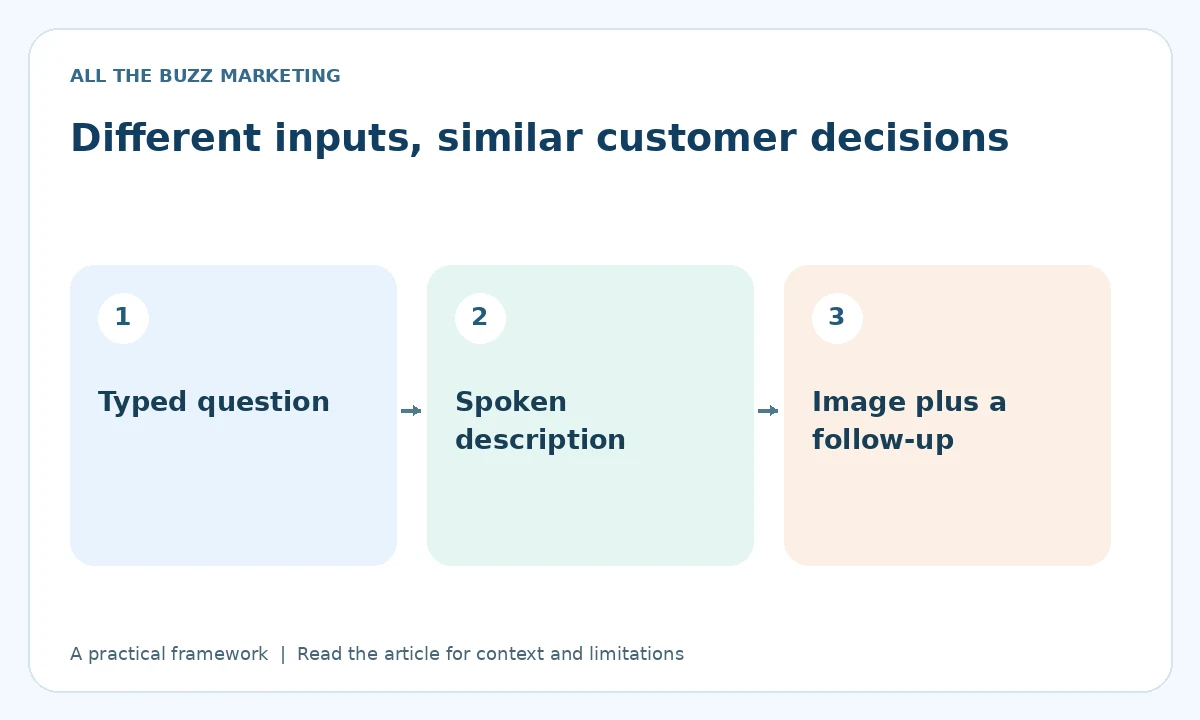
Your next customer may describe a problem aloud, point a camera at it, or ask a follow-up question inside a search conversation. They may never type the tidy keyword your reporting dashboard expects. That possibility changes how we should think about useful content, even while conventional search remains important.
Search intent can outlive the search phrase
A customer trying to solve a problem still needs relevant information: what the issue might involve, which kind of provider can help, and what to do next. The wording and interface can vary while the underlying decision remains similar.
Imagine a hypothetical homeowner showing a damaged window to a search tool and asking whether repair or replacement is worth discussing. The business opportunity is not a magic phrase hidden in the image. It is a clear, accurate explanation of the service and its limits, followed by an appropriate assessment route.
What is already visible?
Google's guidance for generative AI search continues to emphasize accessible, useful content and established SEO fundamentals. Its search experiences can involve longer questions and follow-ups. That gives businesses a reason to organize information around customer tasks rather than treating every page as a container for one repeated phrase.
The timing and extent of future customer behavior are uncertain. This article does not predict that typed search will disappear or that all businesses should replace their SEO strategy with voice-search tactics.
Prepare content that works across ways of asking
Use descriptive headings and readable explanations. Include relevant images with honest captions and alternative text appropriate to their purpose. Explain important service details in actual page text instead of placing everything inside an image or a video with no supporting explanation.
When an image illustrates a scenario, identify it as an illustration where the distinction matters. When a photo documents real work, obtain permission and explain what it shows. Do not imply that an illustrative picture proves a client's result.
Answer the follow-up question
A visitor rarely stops at “What is this service?” They may ask whether it fits their property, what changes the scope, how long assessment takes, or whether an alternative is sensible. Use the questions your team actually receives to choose useful follow-up sections.
Keep boundaries clear. A public explanation cannot diagnose every situation, and an automated summary may omit a caveat. Place important limitations near the relevant claim, and make the route to a qualified human assessment easy to find.
What might change next?
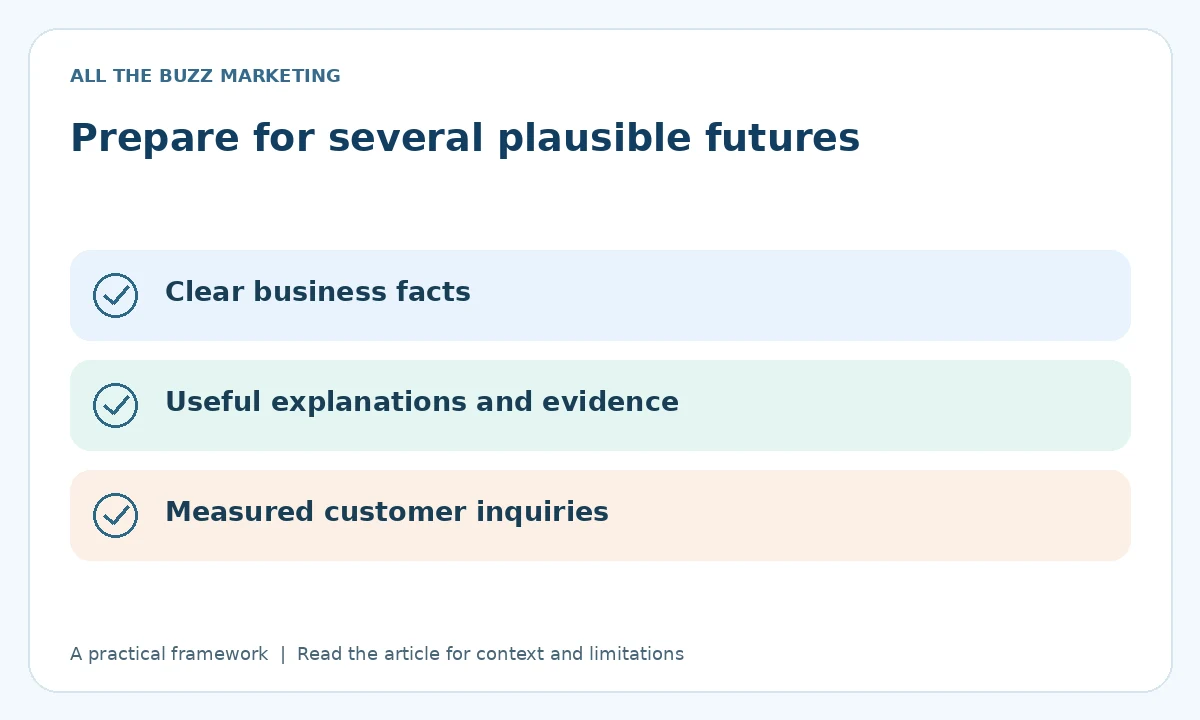
One plausible scenario is that more people arrive having already compared options in an AI interface. Another is that richer visual or spoken searches reveal needs that keyword reports describe only imperfectly. A third is that familiar typed search continues alongside all of them.
These scenarios favor clear business facts, helpful service information, and measurement of suitable inquiries. They do not justify inventing a separate page for every imaginary spoken query.
Watch the questions customers bring
Ask new prospects how they found you and what they understood before contacting the business. Compare that feedback with the search and referral data you can actually observe. Do not label unexplained visits as voice or AI traffic without evidence.
For today's work, use customer-focused keyword selection and firsthand proof in SEO content. For emerging discovery, review the AI search readiness checklist. Build information that helps someone decide, however they begin the conversation.
Turn visibility into a clear next step
Would your content help a customer who asks in a different way? Request a Free Visibility Audit to review service-page clarity, search readiness, and the next step from discovery to contact.
Request Your Free Visibility Audit
No obligation. Ask about current availability.
Explore more understanding google rankings insights or learn how the five-step visibility system works.
Illustrative artwork created for this article. It does not depict a client project or measured business result.