
Understanding Google Rankings · Practical visibility
Information Gain SEO: Add Proof AI Cannot Invent
Information gain SEO starts with useful evidence. Turn real project knowledge into stronger service content without inventing expertise or ranking promises.
All The Buzz Marketing · November 8, 2026
If a competitor could publish your service-page copy by replacing the company name, the page probably needs more of your knowledge. Information gain is a useful editorial idea: give the reader something helpful they could not get from the same generic summary everywhere else.
What information gain means for a business website
In everyday editorial work, information gain means adding a worthwhile contribution to what a reader already knows. For a service business, that might be an annotated project photo, a clear explanation of an estimate, or a decision rule that helps someone avoid buying the wrong service.
This is not a public Google score you can look up, and we do not treat a keyword tool's metric as proof that Google uses a specific information-gain formula. The practical case is simpler: a prospect can make a better decision when your page contains relevant, supportable detail.
Build a proof bank before writing another paragraph
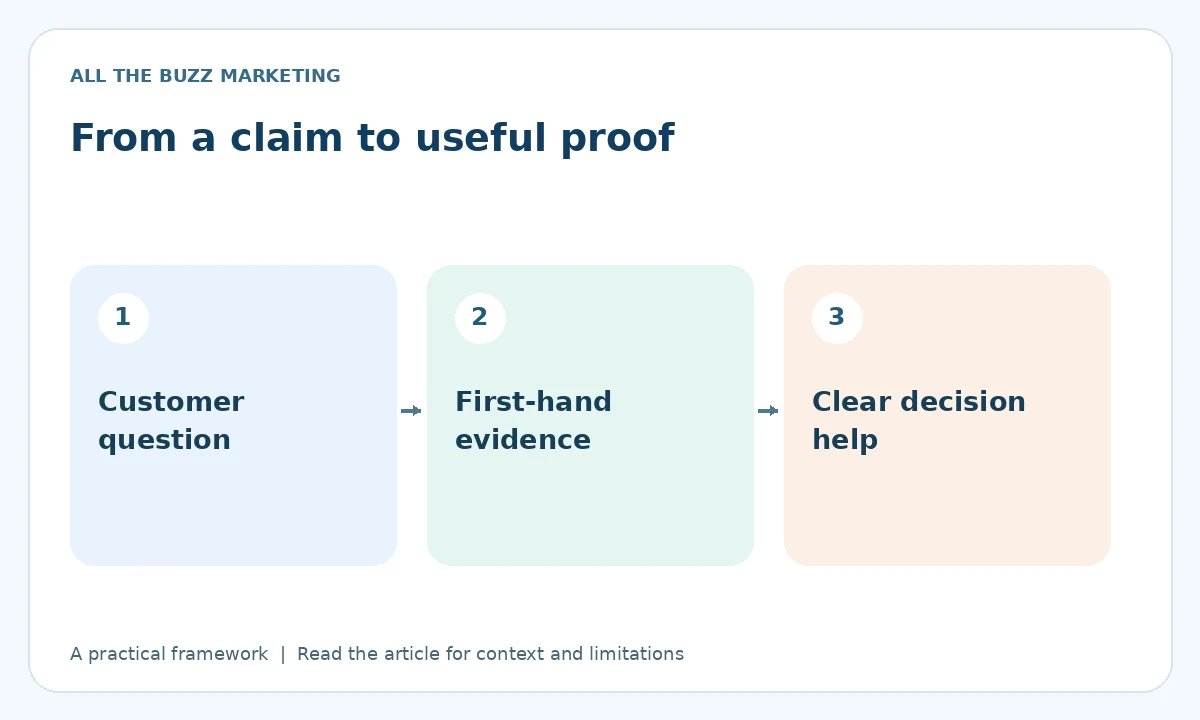
Ask the people who sell and deliver the work three questions: What do customers misunderstand? What changes the recommendation? What evidence can we show? Their answers provide the raw material for search-focused content that reflects the business rather than a reusable template.
- Job conditions: explain which site conditions change the approach.
- Process: show the checks completed before a recommendation.
- Tradeoffs: explain when a cheaper or faster option is unsuitable.
- Scope: distinguish included work from optional or separate work.
- Evidence: use permitted photos, documented outcomes, or clearly labeled demonstrations.
Remove client identifiers or sensitive details before publishing. If you lack permission to use a project, explain the decision principle with a hypothetical example and call it an example. An AI-generated picture is an illustration, not proof that a job happened.
Replace broad claims with decision-making detail
Consider a hypothetical window contractor. “We use quality materials” tells a homeowner little. An explanation of how frame condition affects an installation estimate gives the reader something to discuss at the appointment. A photo with an accurate caption can make the distinction easier to understand.
The same principle applies to professional services. Replace “custom solutions” with a short explanation of what is assessed, which inputs affect the recommendation, and what the customer receives. Keep the description truthful and avoid publishing a proprietary checklist that should remain private.
Give each page a specific job
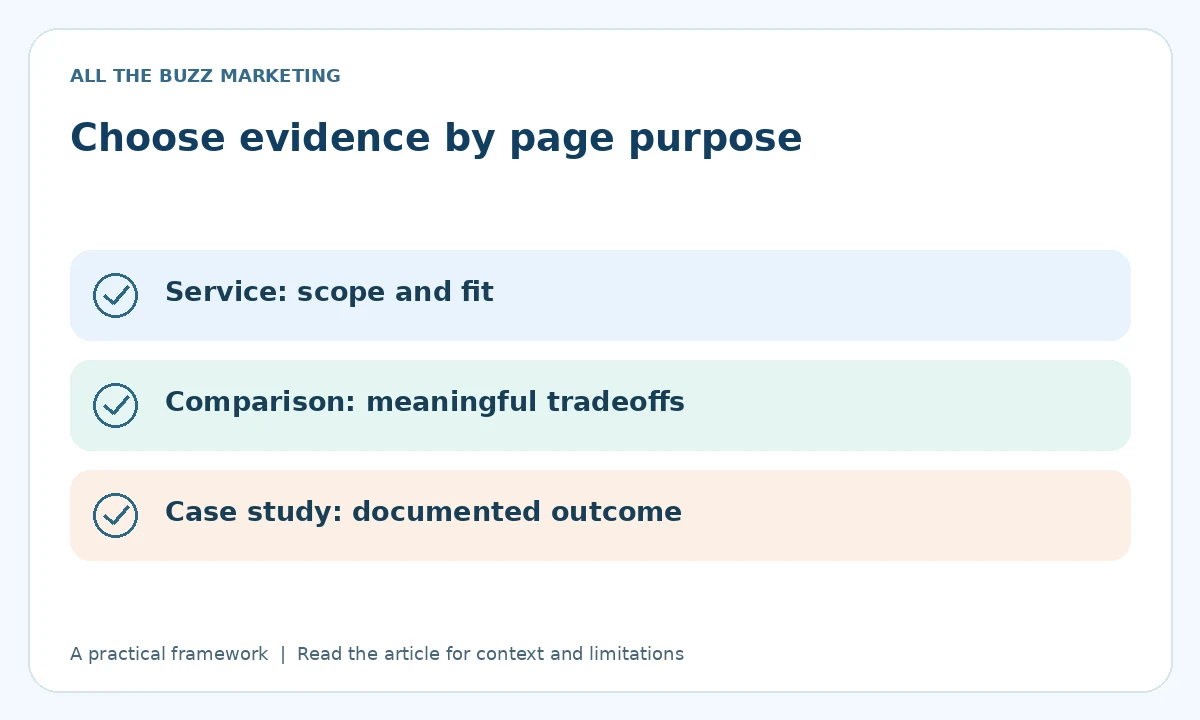
Do not paste the proof bank onto every location page. Select the evidence that answers the question behind that page. A comparison article needs useful differences. A service page needs scope, suitability, and a next step. A case study needs a documented starting point, intervention, outcome, and limitations.
Use customer-focused keyword selection to connect the evidence with the right intent. Then check headings, links, and metadata with the service-page SEO checklist.
What to measure after improving the content
Note the publication date and the questions the new section answers. Review relevant search queries, engagement with useful sections where measured, and the suitability of inquiries. Compare periods carefully because seasonality, ranking changes, and other site work can affect results at the same time.
Google's people-first content guidance emphasizes original value and evidence of experience. That supports the editorial direction; it does not promise that a particular addition will increase rankings. Start with one important service page and make it substantially more useful before turning the same process into a publishing program.
Turn visibility into a clear next step
Want to know where your pages sound interchangeable? Request a Free Visibility Audit for a practical review of content gaps, supporting evidence, and the path from search to inquiry.
Request Your Free Visibility Audit
No obligation. Ask about current availability.
Explore more understanding google rankings insights or learn how the five-step visibility system works.
Illustrative artwork created for this article. It does not depict a client project or measured business result.