
AI Overviews SEO & Organic Click-Through Rate
AI Overviews and SEO: Why Impressions Rise While Clicks Fall
Understand what the numbers mean before changing your strategy, then focus on the searches and visits that matter to your business.
Impressions, Clicks, and Inquiries Tell Different Parts of the Story
An impression records your site appearing in a search result under that report’s counting rules. A click records someone following a result. An inquiry happens later, when a person calls, submits a request, or books. These measures belong together, but they do not describe the same action.
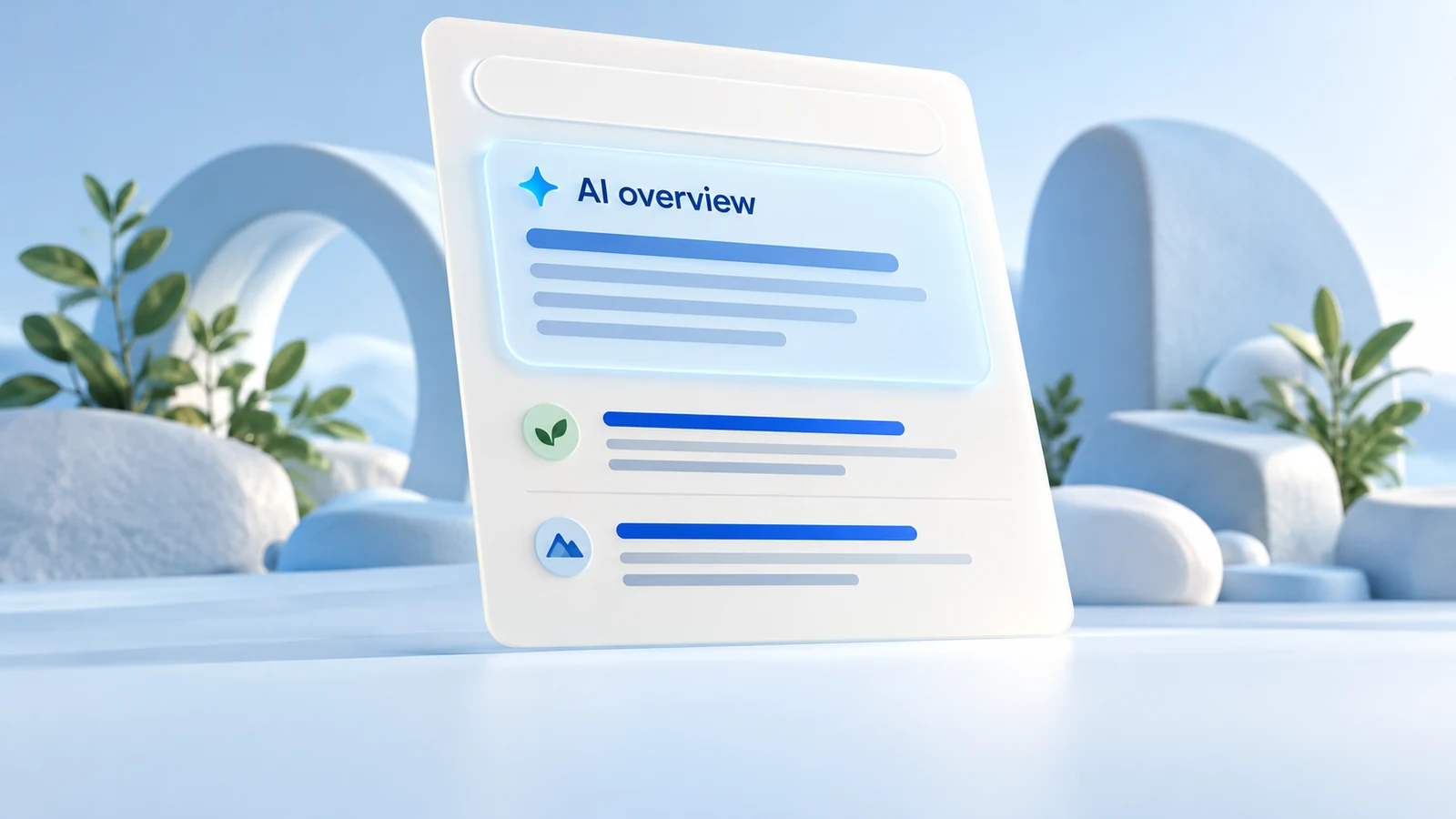
AI Overviews can answer some questions directly while offering source links for further reading. Other search features, customer intent, and competition also influence where people go next. If impressions increase while clicks decrease, AI may be part of the picture, but that pattern alone does not identify the cause.
Google introduced dedicated generative AI impression reports in June 2026 and says they became available worldwide on August 31. They show AI visibility by pages and other dimensions. The launch announcement lists impressions rather than a separate AI click metric, so a visibility report should not be treated as proof of website referrals or leads.
The Search Visibility & SEO Guide explains the foundation. Here, the goal is to read changes in exposure and traffic sensibly, then decide where improving the customer’s search experience could help. Keep informational questions and service-buying searches separate when reviewing a change, because their next steps can be very different.
The Mix of Searches Can Change Your Click-Through Rate
Organic click-through rate is clicks divided by impressions. In a hypothetical example, 40 clicks from 1,000 impressions is 4%. The same 40 clicks from 2,000 impressions is 2%. The rate has halved, even though visits have not fallen. Check both numbers before judging what changed.
Consider what those extra searches mean. A general question about your industry may create awareness, while a service-and-location search can lead to a different decision. A focused SEO content and search ranking strategy considers intent, rather than judging every impression equally.

Questions About AI Overviews, Search Impressions, and Website Clicks
Why are my Google impressions up but clicks down?
Several explanations are possible. You may appear for more informational searches, face stronger competing results, or receive different exposure through search features. Some visitors may get enough information without opening a website. Compare the affected queries and pages before choosing a response. The pattern is a reason to investigate, not a diagnosis by itself.
Do AI Overviews always reduce organic website traffic?
No single effect applies to every query or business. An AI answer may satisfy a brief information need, while a complex buying decision can still lead people toward a source or provider. Judge your own relevant queries and customer outcomes. Google’s AI search guidance explains how supporting links and query expansion can surface pages.
Does a lower organic click-through rate mean my SEO is failing?
Not automatically. A broader set of impressions can lower the percentage even when clicks hold steady. Falling clicks on important service searches deserve a different review from new exposure on broad questions. Compare like-for-like pages and query groups, then consider inquiries as well. A single site-wide percentage can hide those differences.
Can Search Console show every lead that came from an AI answer?
No. Search Console describes Google Search performance, not every interaction across AI tools or your sales process. Its AI impression reports do not establish that someone became a lead. Website analytics and inquiry records add useful context, while direct calls and later branded searches may be harder to attribute. Keep source visibility and customer outcomes distinct.
What can make a search result more useful to a potential customer?
A descriptive page title, clear service focus, and content that answers the buying question can help people judge whether the page is worth opening. Explain the business accurately and offer useful details the customer still needs. Google may display different title or snippet text, so review the actual result rather than assuming it always matches your settings.
What should I do if website traffic is down but inquiries remain steady?
Check whether the remaining visits are better matched to the service, whether inquiry tracking is reliable, and whether demand has changed. Stable inquiries can be encouraging, but they do not explain every traffic loss. Keep monitoring valuable searches and lead quality. A connected website conversion system helps assess the business outcome alongside traffic.

Focus on Searches That Lead to a Useful Decision
A visitor searching “how long does roof replacement take?” needs an explanation that helps plan a project. Someone searching for a nearby provider also needs service fit, coverage, and a contact route. Those needs are connected, but a generic answer will not serve both equally well.
Connect informative pages with the relevant service and supporting proof. The AI Search Guide covers discovery and attribution, while the article on AI search and customer inquiries explores what happens after someone finds the business.
Measure Useful Visibility, Then Improve the Customer Path
Use impressions to understand exposure, clicks to understand visits, and inquiry records to understand customer action. When the numbers move apart, look for the reason before changing your content or marketing spend. AI Overviews SEO is part of that review, alongside other search and website factors.
All The Buzz connects rankings, local discovery, AI visibility, Maps, and conversion. The case studies provide examples of business outcomes worth measuring beyond a single search metric.