
Getting Found in AI Search · Future possibilities
Who Owns the Lead When AI Books the Appointment?
If AI helps book an appointment, how will you measure the lead? Explore attribution, customer confirmation, and useful preparation for agent-assisted inquiries.
All The Buzz Marketing · November 8, 2026
A customer asks an assistant to find a suitable provider. The assistant compares options and helps arrange an appointment. Your calendar fills, but the customer never uses the normal website form. Which channel gets credit, and how does the team know the appointment reflects what the customer wanted?
First, define what “owns the lead” means
Here, ownership means operational responsibility and marketing attribution: who responds, where the request is recorded, and which observable touchpoints receive credit. It is not a claim about legal ownership of customer information or the terms of a particular platform.
The scenario is plausible because some agent-assisted discovery and booking experiences already exist in defined settings. It does not mean every assistant can book every service or that a business can assume support without checking the actual platform and integration.
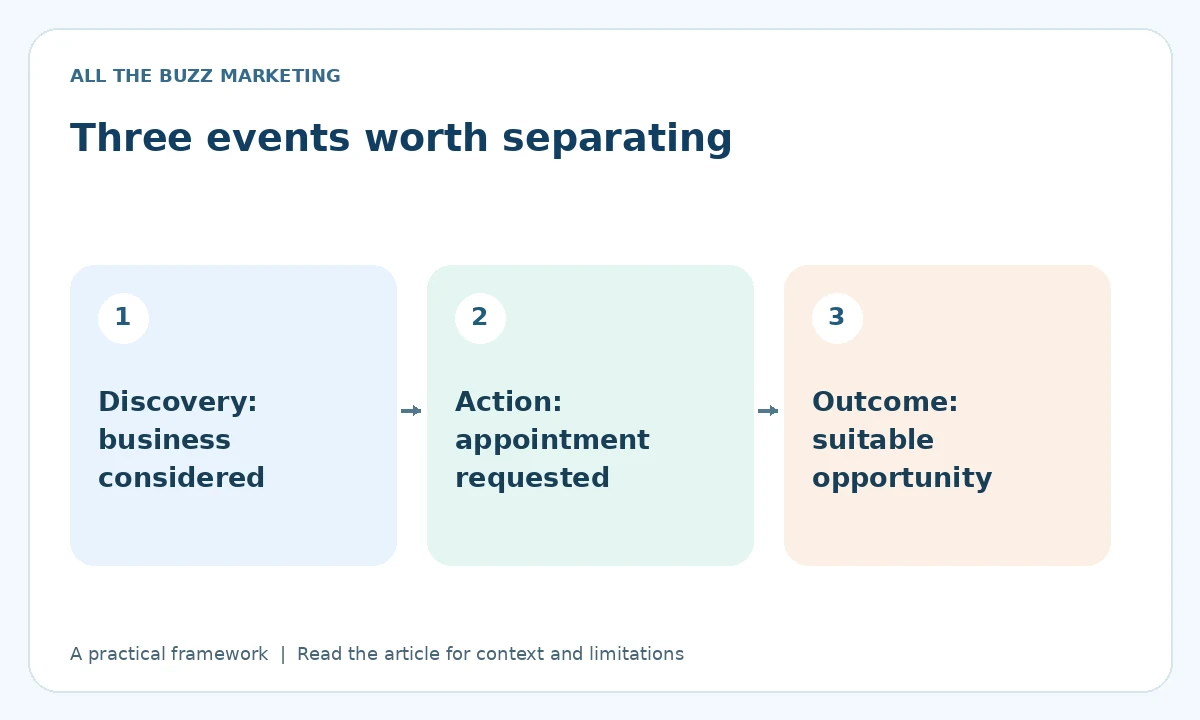
Separate discovery, action, and outcome
A recommendation is a discovery event. A completed booking is an action. An attended appointment or suitable sales opportunity is a business outcome. Treating all three as “an AI lead” can obscure where things work and where they fail.
A future integration may provide source details, while another may pass along little context. Establish which fields are actually available and reliable. Do not invent the missing first touch or credit an entire sale to the last visible click by default.
The customer still needs to understand the commitment
Even if an assistant handles part of the process, the customer should know which business is involved, what they requested, and what remains to be confirmed. A requested appointment window should not quietly become a promise of technical suitability or a fixed project price.
Build a clear confirmation and correction route. Give staff the information needed to respond, and provide a way for the customer to contact the business directly. Record only the information the business needs for the task, rather than retaining an entire private conversation because it might someday be useful.
Prepare a source-of-truth record
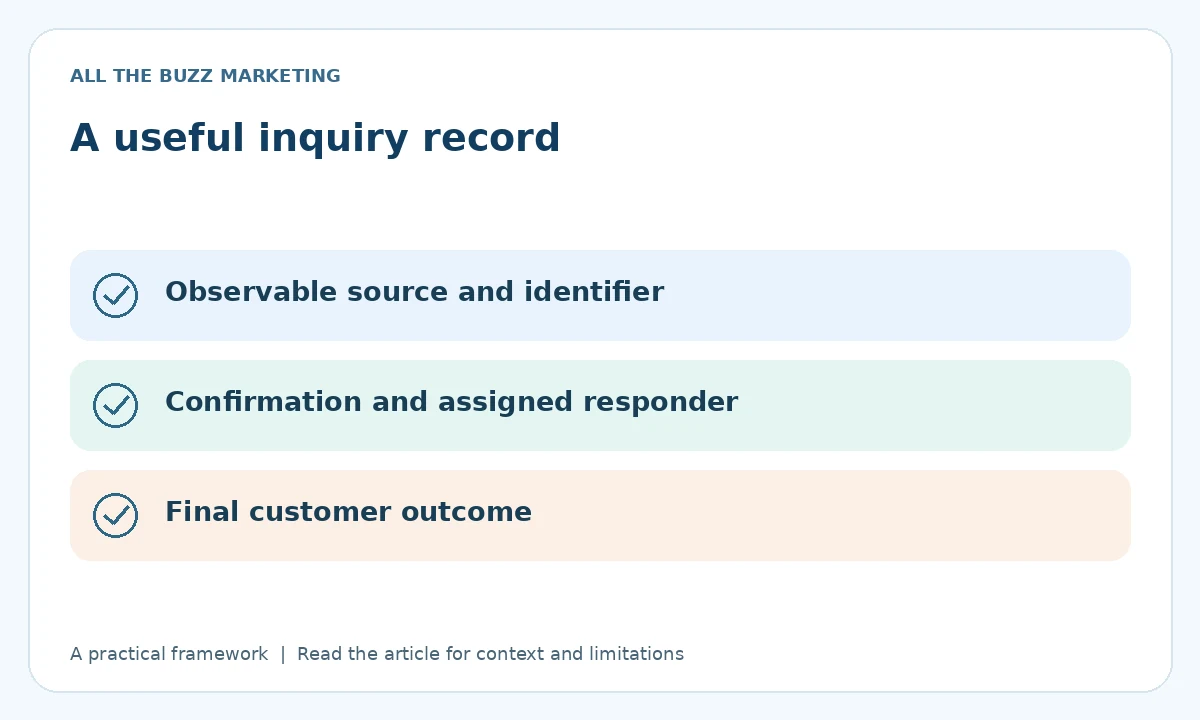
For a hypothetical service company, that record might include an inquiry identifier, requested service, received time, observable source, confirmation status, assigned responder, and eventual outcome. The fields depend on the actual business process and available systems.
If the source is unknown, keep it unknown. If an automated appointment is cancelled, retain that status in the measurement process rather than counting the booking as an unqualified success forever.
What could change?
One future could bring richer, standardized referral details from connected tools. Another could leave businesses with fragmented records across booking partners and assistants. Either way, a disciplined customer record and a clear human handoff would remain useful.
Watch for platform-supported identifiers, customer confirmation controls, integration reliability, and the ability to reconcile bookings with real outcomes. These are operational signals, not predictions that a particular protocol will become universal.
Start with measurement you can trust today
Use the AI lead-tracking guide to distinguish identifiable referrals from unknown traffic. Review a cautious first customer workflow before adding action-taking tools. Then test confirmation and follow-up through the entire contact process.
The future may change how an inquiry arrives. It should not leave the business wondering who is supposed to answer it.
Turn visibility into a clear next step
Are your discovery, booking, and follow-up records telling the same story? Request a Free Visibility Audit to identify practical measurement and inquiry-path gaps.
Request Your Free Visibility Audit
No obligation. Ask about current availability.
Explore more getting found in ai search insights or learn how the five-step visibility system works.
Illustrative artwork created for this article. It does not depict a client project or measured business result.